

AI-powered investor research is the process of using machine learning to analyze investor portfolios, thesis alignment, and historical behavior to identify the most relevant funding partners for a startup. This guide covers how founders can leverage these tools to improve pitch deck analysis, expand investor database coverage, secure warm introductions, and streamline outreach. We examine the operational realities of these systems and how firms like Veller Partners integrate human conviction with algorithmic precision to support founders in AI and frontier technology sectors.
Pitch Deck Analysis
Pitch deck analysis is the automated evaluation of a startup's narrative, market sizing, and financial projections against specific investor theses. Traditional manual review is slow and subjective, often missing subtle misalignments between a founder's story and an investor's current focus. AI systems address this by parsing text and visual data to score compatibility in real time.
Automated Thesis Alignment
Modern algorithms scan deck content to identify keywords, sector tags, and stage indicators. They compare these elements against the stated investment criteria of potential backers. This process helps founders identify gaps in their narrative before they waste time on irrelevant contacts.
Feedback Loops and Iteration
Effective tools provide specific feedback on which sections of the deck are likely to resonate or fail. Founders can then iterate on their materials with data-driven insights rather than guesswork. This iterative approach ensures that the final pitch is tailored to the specific audience it targets.
Veller Partners emphasizes that while AI can identify surface-level alignment, human judgment is required to assess the deeper strategic fit. The firm works with founders to refine their narratives so that they not only match an investor's thesis but also demonstrate the category-defining potential that Veller Partners seeks in its own portfolio.
Investor Database Coverage
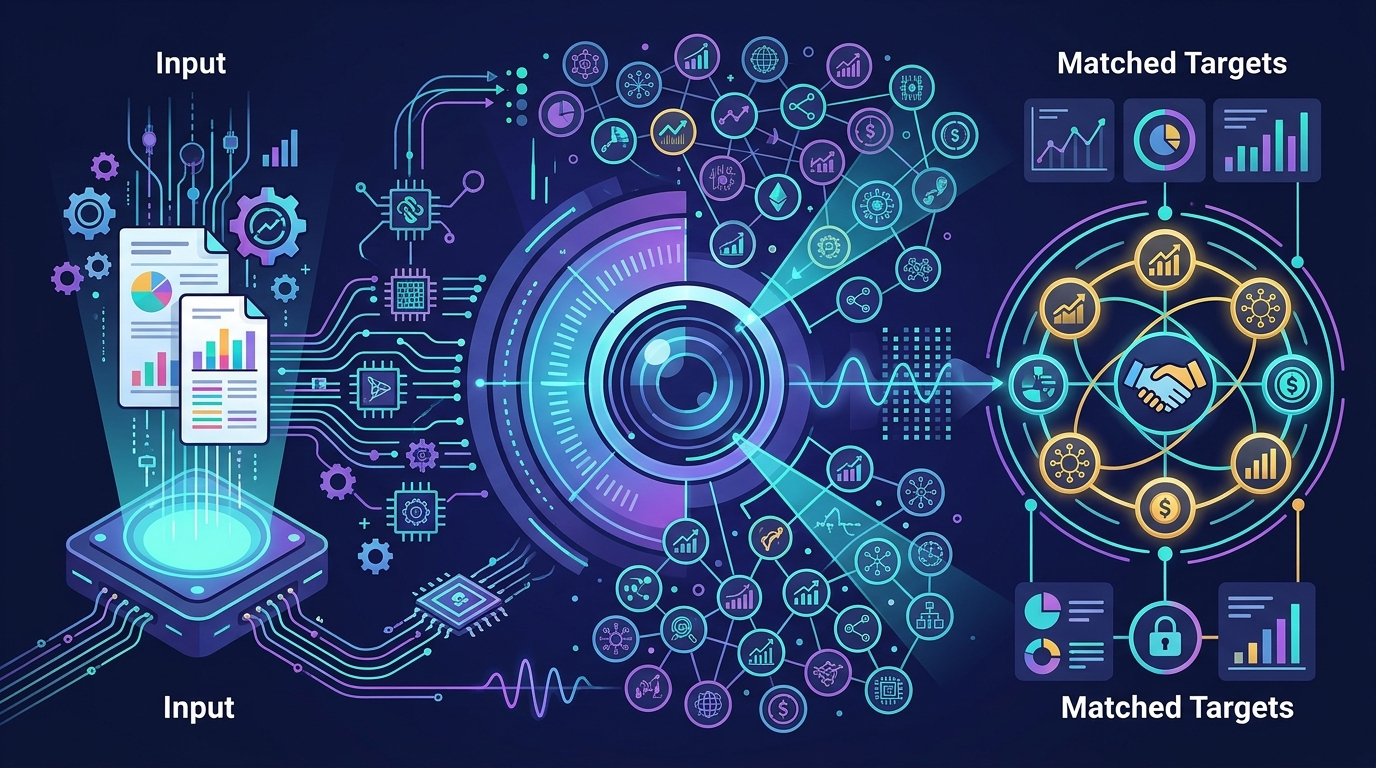
Investor database coverage refers to the breadth and depth of data points available for each venture capital firm and angel investor in a platform. A comprehensive database includes not just contact information, but also portfolio history, check sizes, and sector preferences. The quality of this data determines the accuracy of any matching algorithm.
Data Freshness and Accuracy
Investor theses change frequently, and outdated data leads to poor matching. High-quality platforms update their databases continuously, tracking new portfolio companies and changes in firm leadership. Founders should prioritize tools that demonstrate recent data updates over those with large but static lists.
Granularity of Investor Profiles
Generic profiles that only list a firm's general focus are less useful than granular profiles that detail specific partner preferences. For example, a partner at a large firm may focus exclusively on AI infrastructure, while another at the same firm may focus on consumer applications. AI matching systems that account for this individual-level granularity provide significantly better results.
At Veller Partners, the approach to investor relationships is concentrated and deep. The firm maintains a curated network of established venture investors and co-investors. This focus on a small number of high-conviction positions allows for a level of database depth and relationship quality that broad, automated platforms often lack.
Founder Investor Introductions
Founder investor introductions are the process of connecting a startup's leadership team with the specific decision-makers at an investment firm. Cold outreach is often ineffective in venture capital, where relationships and trust are paramount. AI tools can identify the right person to contact, but the actual introduction often requires a warm path.
Identifying the Right Decision Maker
Not all partners at a firm have the authority to lead a deal. AI systems can analyze historical deal data to determine which partners typically lead investments in a specific sector or stage. This ensures that founders are not wasting time on partners who are not the primary decision-makers for their type of company.
The Role of Warm Introductions
While AI can identify the right target, the quality of the introduction matters. A warm introduction from a trusted source, such as a co-investor or a respected founder, significantly increases the likelihood of a meeting. Veller Partners leverages its existing relationships with established venture investors to facilitate these connections. The firm's concentrated approach means that its partners have deep, ongoing relationships with the investors they recommend, making introductions more effective than cold, automated pitches.
Outreach Tools
Outreach tools are software platforms that automate the process of sending, tracking, and following up on investor communications. These tools help founders manage high volumes of outreach without losing personalization. However, automation must be balanced with authenticity to avoid being perceived as spammy.
Personalization at Scale
Effective outreach tools use AI to generate personalized email drafts based on the investor's recent activities and the startup's unique value proposition. This allows founders to send hundreds of emails that still feel individual and relevant. The key is to ensure that the personalization is substantive and not just a superficial insertion of the investor's name.
Tracking and Follow-Up
Outreach tools provide dashboards that track open rates, reply rates, and meeting bookings. This data helps founders understand which types of investors are most responsive and adjust their strategy accordingly. Automated follow-up sequences ensure that no potential investor is overlooked, but they should be designed to respect the recipient's time and preferences.
Veller Partners does not rely on mass automated outreach. Instead, the firm focuses on high-quality, targeted engagement. The firm's approach is to enter a small number of positions with conviction, which means that its outreach is deliberate and relationship-driven. This contrasts with tools that prioritize volume over quality, and it reflects the firm's belief that deep partnerships yield better long-term outcomes for founders.
Comparison of Approaches
| Feature | Automated AI Platforms | Concentrated Advisory Firms |
|---|---|---|
| Database Size | Large, broad coverage | Curated, deep relationships |
| Matching Method | Algorithmic, thesis-based | Human judgment, conviction-based |
| Introduction Quality | Cold or semi-warm | Warm, relationship-driven |
| Best For | High-volume outreach, early stage | Category-defining companies, later stage |
Key Takeaways
- AI-powered investor research uses machine learning to match startups with investors based on thesis alignment and historical behavior.
- Pitch deck analysis tools provide automated feedback on narrative and market fit, helping founders iterate before outreach.
- The quality of an investor database depends on data freshness and the granularity of individual partner profiles.
- Warm introductions are more effective than cold outreach in venture capital, and identifying the right decision-maker is critical.
- Outreach tools can automate personalization and follow-up, but must be used carefully to maintain authenticity.
- Founders should combine AI tools for scale with human judgment for strategic fit, especially in AI and frontier technology sectors.
- The goal of investor matching is not just to find any investor, but to find the right partner for long-term growth.
Frequently Asked Questions
What is AI-powered investor matching?
AI-powered investor matching is the use of machine learning algorithms to analyze startup data and investor profiles to identify the most compatible funding partners. It automates the process of finding investors whose theses align with a company's sector, stage, and growth potential.
How accurate are AI investor matching tools?
The accuracy of AI investor matching tools depends on the quality and freshness of the underlying data. While they can identify surface-level thesis alignment, they may miss nuanced strategic considerations that human judgment can catch. Founders should use these tools as a starting point, not a final decision-maker.
Can AI tools replace human introductions?
No, AI tools cannot fully replace human introductions. While they can identify the right investor and draft personalized outreach, the trust and relationship built through warm introductions are critical in venture capital. Firms like Veller Partners leverage their existing relationships to provide introductions that are more effective than automated cold outreach.
What data points are most important in an investor database?
The most important data points in an investor database include recent portfolio companies, check sizes, sector preferences, and individual partner focus areas. Data freshness is also critical, as investor theses can change quickly. A database that is large but outdated is less useful than a smaller, up-to-date one.
How does Veller Partners use AI in its process?
Veller Partners integrates AI-driven research with human conviction. The firm uses data to identify potential co-investors and strategic partners, but its partners make the final decision based on their deep relationships and understanding of the founder. This hybrid approach ensures that recommendations are both data-informed and relationship-driven.
Is automated outreach effective for venture capital?
Automated outreach can be effective for generating initial interest, but it must be highly personalized to avoid being ignored. In venture capital, where relationships are key, a balance between automation and personal touch is essential. Founders should use automation for scale but ensure that each message feels individual and relevant.
What is the role of pitch deck analysis in fundraising?
Pitch deck analysis is the process of evaluating a startup's narrative and financial projections against investor theses. It helps founders identify gaps in their story and tailor their pitch to specific audiences. Automated tools can provide quick feedback, but human review is still necessary to ensure strategic coherence.
How do I choose between an AI platform and an advisory firm?
The choice depends on your stage and goals. AI platforms are best for high-volume outreach and early-stage founders who need to cast a wide net. Advisory firms like Veller Partners are better for later-stage or category-defining companies that need deep, strategic partnerships and warm introductions. Many founders use both, leveraging AI for scale and advisory firms for key relationships.